 Talents

SOURCING FORCE TALENTS · BME CONSULTING
A prepared assignment. A simpler supplier process.
Use the complete 20-page English guide and this preparation sheet to connect your project need with its purchasing process. Country-specific UK, US and France-related questions should be reviewed for the actual engagement.
YOUR PRACTICAL PREPARATION GUIDE
What makes a useful professional-services brief?
A useful brief describes the expected result, selected specialist, timetable and acceptance criteria. It connects the manager’s need with Procurement and Finance requirements, creating a basis for reviewing entrusted purchases with BME. The complete English whitepaper is available through the resource form. The guide includes UK/US-oriented evidence and budget preparation; France-related vigilance remains within its stated scope rather than being treated as local UK or US law.
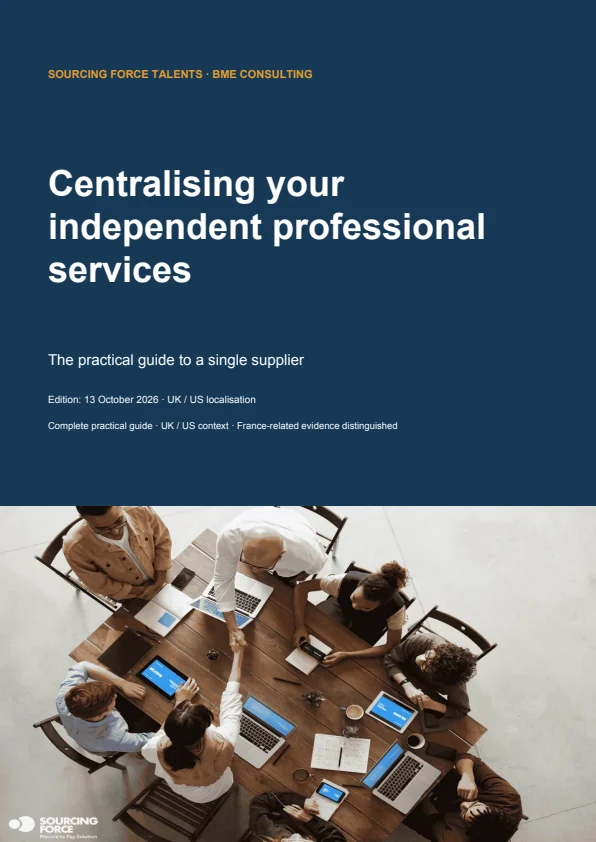
Your complete practical guide. Ready to download.
Use the complete 20-page English guide and this preparation sheet to connect your project need with its purchasing process. Country-specific UK, US and France-related questions should be reviewed for the actual engagement.
Get the English guideGet the practical guide
A complete 20-page guide to provider onboarding, due diligence documents, contracts and invoicing of independent professional services.
The download is available after submission, without requiring a marketing subscription.
This form is provided by HubSpot.
Having trouble opening the form? Contact our team.
BME CLIENT EXPERIENCE
Professional services already entrusted to BME.






01 · PREPARING PROFESSIONAL SERVICES
Start with the results your team expects.
State what the service should produce: a deliverable, training, analysis, audit or support. Add the context in which the result will be used and the person able to approve it. This helps contacts share the same understanding of the project. It also distinguishes multiple assignments when expertise, periods or outputs differ. A meaningful brief explains the result rather than only a job title or duration.
The diagram gives five preparation references to adapt to your situation. Begin with assumptions where decisions remain open and make those points visible before commercial review. Expected results are easier to discuss than a resource label with no explanation of the contribution. Identify the client and work location early, because the same purchasing need may require different legal or tax questions for UK, US or France-related work.
Outputs and usage
Structures and countries
Contracts and relevant evidence
02 · PREPARING PROFESSIONAL SERVICES
Identify the specialists and purchases to bring together.
For each service, give the professional’s expertise, known structure and establishment country. Describe the work location and proposed conditions. If several specialists are involved, connect each to their assignment and outputs. This lets the parties review purchases within a common supplier relationship while retaining the information needed to follow each service.
If you are a freelancer, describe the client’s requested process: supplier onboarding, expected documents and responsible contacts. Exact requirements depend on the project, countries and parties. The international and freelancer guides develop these questions. Keep the first summary non-confidential and state what is known at the time of the enquiry; detailed evidence follows the appropriate private channel later.

03 · PREPARING PROFESSIONAL SERVICES
Prepare commitments and the use of deliverables.
Connect the operational scope with terms to discuss: results, timetable, acceptance, responsibility and delivery arrangements. Describe access, confidentiality and intended use of outputs where relevant. For software or creative work, mention reuse, modification and maintenance requirements. Those facts should be reviewed by competent contacts rather than assuming a general agreement covers every intended use.
Intellectual-property and data questions should be prepared before commitment. The applicable UK or US framework depends on the parties and work; payment alone should not be treated as automatic transfer of every right. The practical preparation step is to explain intended uses and identify the terms requiring review. The contracts and documents guide helps organise the other questions for the service, alongside the actual working arrangements.

Already selected a specialist or a service scope?
Get the English guide ↗04 · PREPARING PROFESSIONAL SERVICES
Connect acceptance with the expected invoice.
State who accepts outputs or a delivered period and which evidence is needed. Add the known purchasing process, references and billing arrangements to discuss. For several purchases, explain what Finance needs to see in a consolidated invoice. Centralisation should retain assignment detail so reconciliation is understandable to the teams concerned.
Values, expenses and dates are confirmed in commercial review and the agreed terms. The supplier cost calculator models your internal creation and annual-maintenance costs; it is not a BME tariff. The preferred timetable is a discussion input, not an assignment-start commitment. Identify approvals already available and those still to organise, including the required country or status assessment where relevant.
05 · PREPARING PROFESSIONAL SERVICES
Use a short sheet to prepare your discussion with BME.
Gather the information in a concise sheet to share with your business contacts. The table identifies topics to complete and points that may still need clarification. Adapt it for one assignment or several services. Keep it readable: it prepares discussion before the detailed document dossier is assembled. Separate known facts, assumptions and unanswered questions so the commercial review starts from an accurate picture.
When making an enquiry, reuse the non-confidential need summary, countries and preferred date. BME identifies additional information and the appropriate channel for evidence if needed. All company sizes and values can begin this discussion. The commercial team clarifies the scope with the parties around the purchases you would like to entrust, rather than treating the guide as a signed agreement or automatic approval.
| Topic | Information to provide | Points to clarify |
|---|---|---|
| Expected results | Deliverables and intended use | Acceptance criteria |
| Specialists | Expertise, structures and countries | Assignment allocation |
| Timetable | Preferred date and milestones | Open decisions |
| Supplier process | Purchases and responsible contacts | Onboarding and evidence |
| Invoicing | References and periods | Acceptance and consolidation |
YOUR NEXT PROJECT
Your selected specialists. One supplier to organise the purchases.
Present the assignment, provider and preferred timetable. BME reviews commercial coordination, document follow-up and invoicing for the entrusted scope with you.
Get the English guide ↗